
Stone Mountain Livable Centers Initiative
Connecting Paths, Parks, and Public Spaces
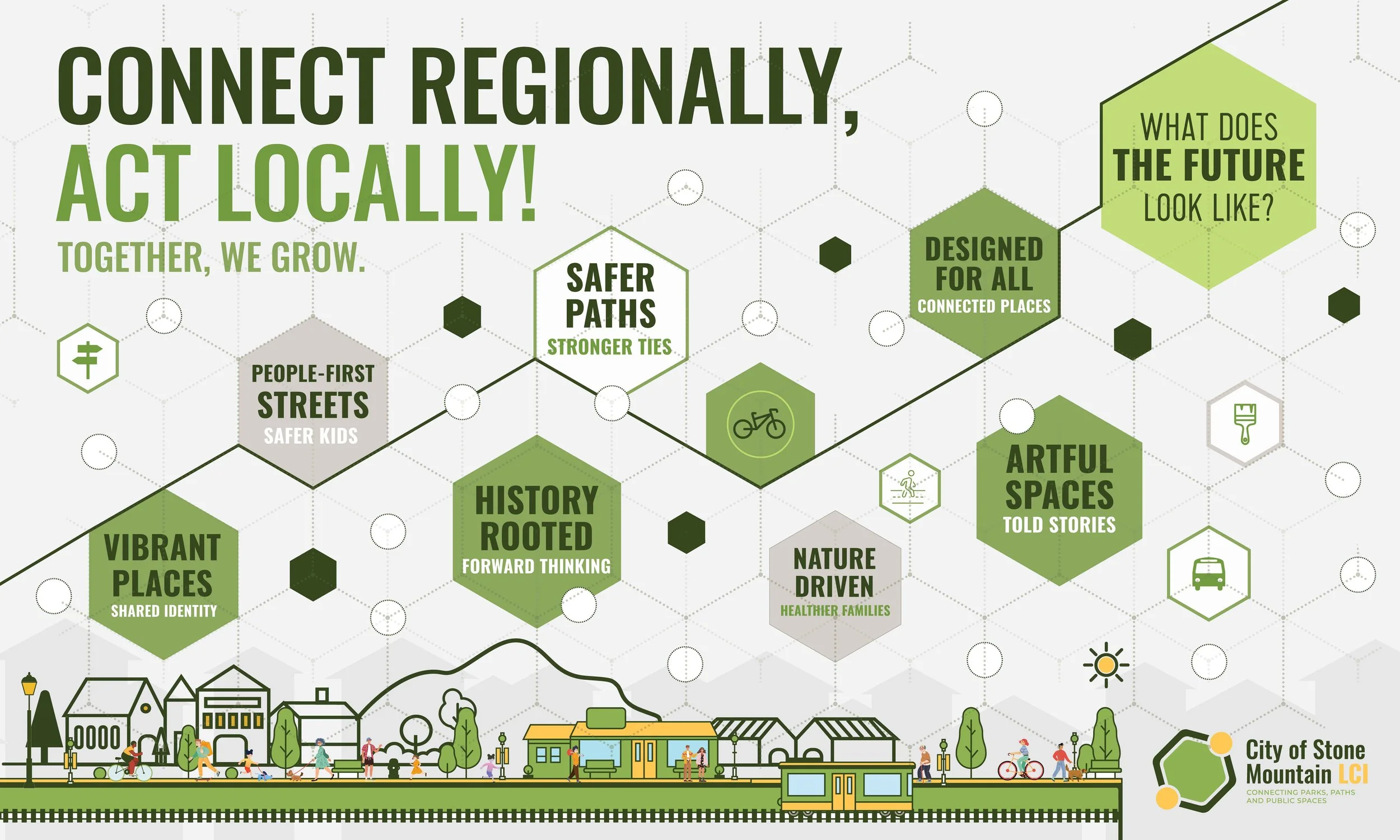
Overview.
The City of Stone Mountain’s Connecting Parks, PATHs, and Public Spaces project builds on previous Livable Centers Initiative (LCI) planning efforts to strengthen bicycle and pedestrian connectivity throughout the city. The study envisions a seamless green network connecting the historic downtown, surrounding neighborhoods, local parks, and Stone Mountain Park. Beyond mobility, the project explores opportunities for placemaking, public art, and enhanced public spaces that celebrate the Village’s identity and encourage community activity.
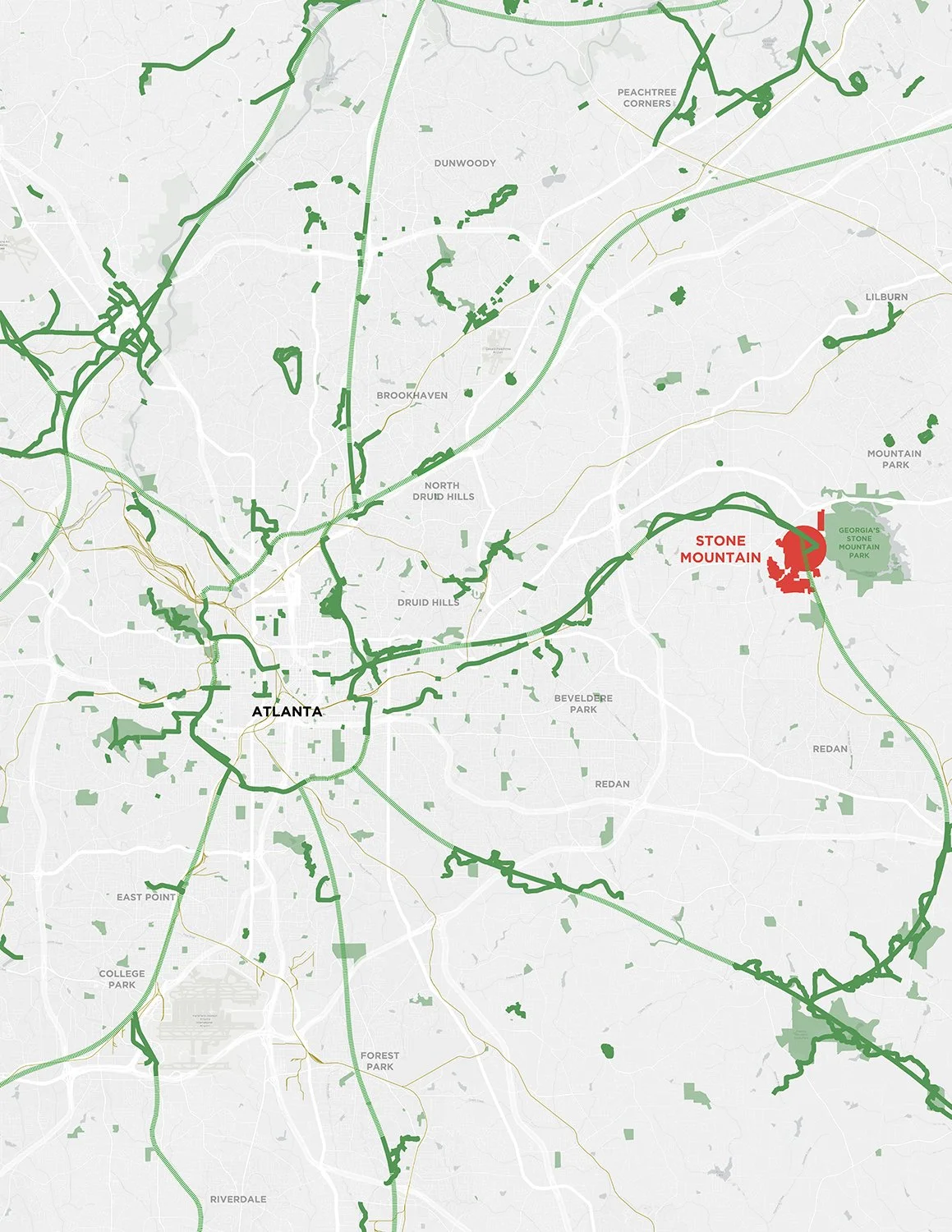
Regional Connectivity.
Located east of Atlanta, the City of Stone Mountain occupies a strategic position within the regional trail network. The Stone Mountain Trail connects Atlanta to Stone Mountain Park, but a half-mile gap through the city's historic downtown interrupts this continuous route. Closing this gap presents an opportunity to strengthen regional bicycle and pedestrian connectivity while positioning downtown Stone Mountain as a gateway to the broader trail system.
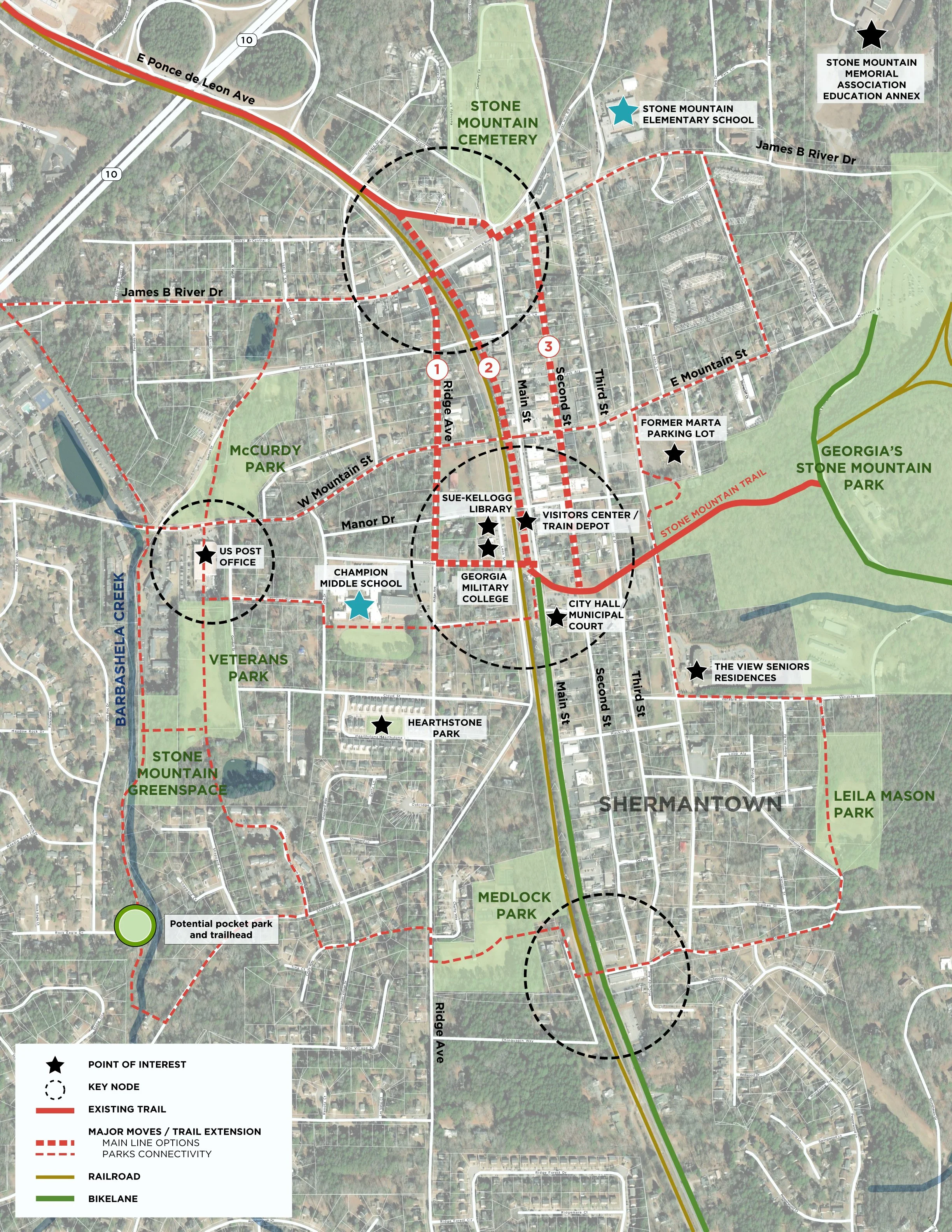
Local Connectivity.
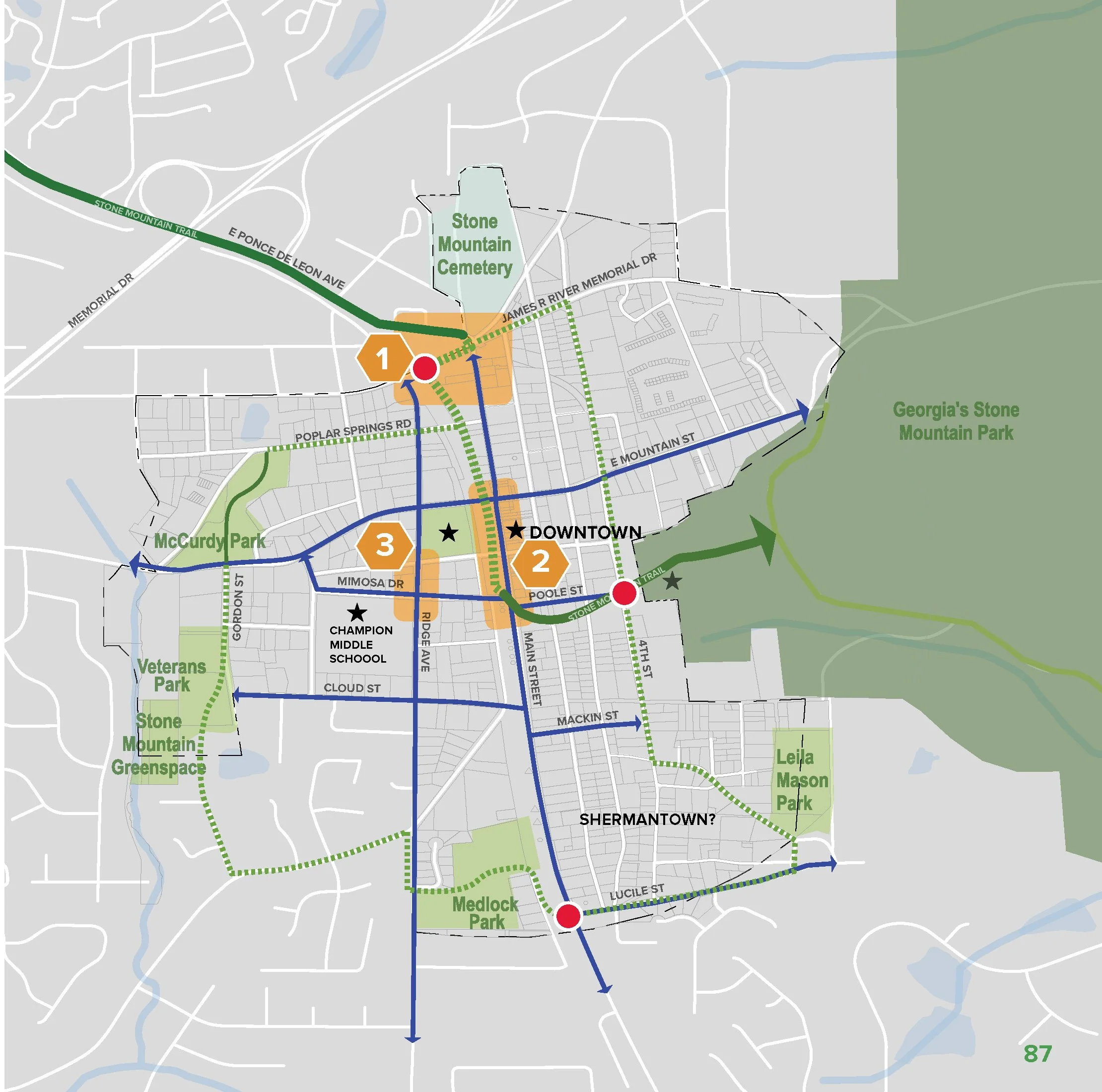
The study explored three potential trail alignments through Stone Mountain Village, evaluating opportunities to close the existing PATH gap while connecting neighborhoods, parks, and civic destinations. The proposed network links key destinations, including the City Cemetery, McCurdy Park, Veterans Park, Medlock Park, and Leila Mason Park. Improvements to crossings, sidewalks, and trail infrastructure aim to establish a cohesive green loop that strengthens local access and connects the Village to Stone Mountain Park.
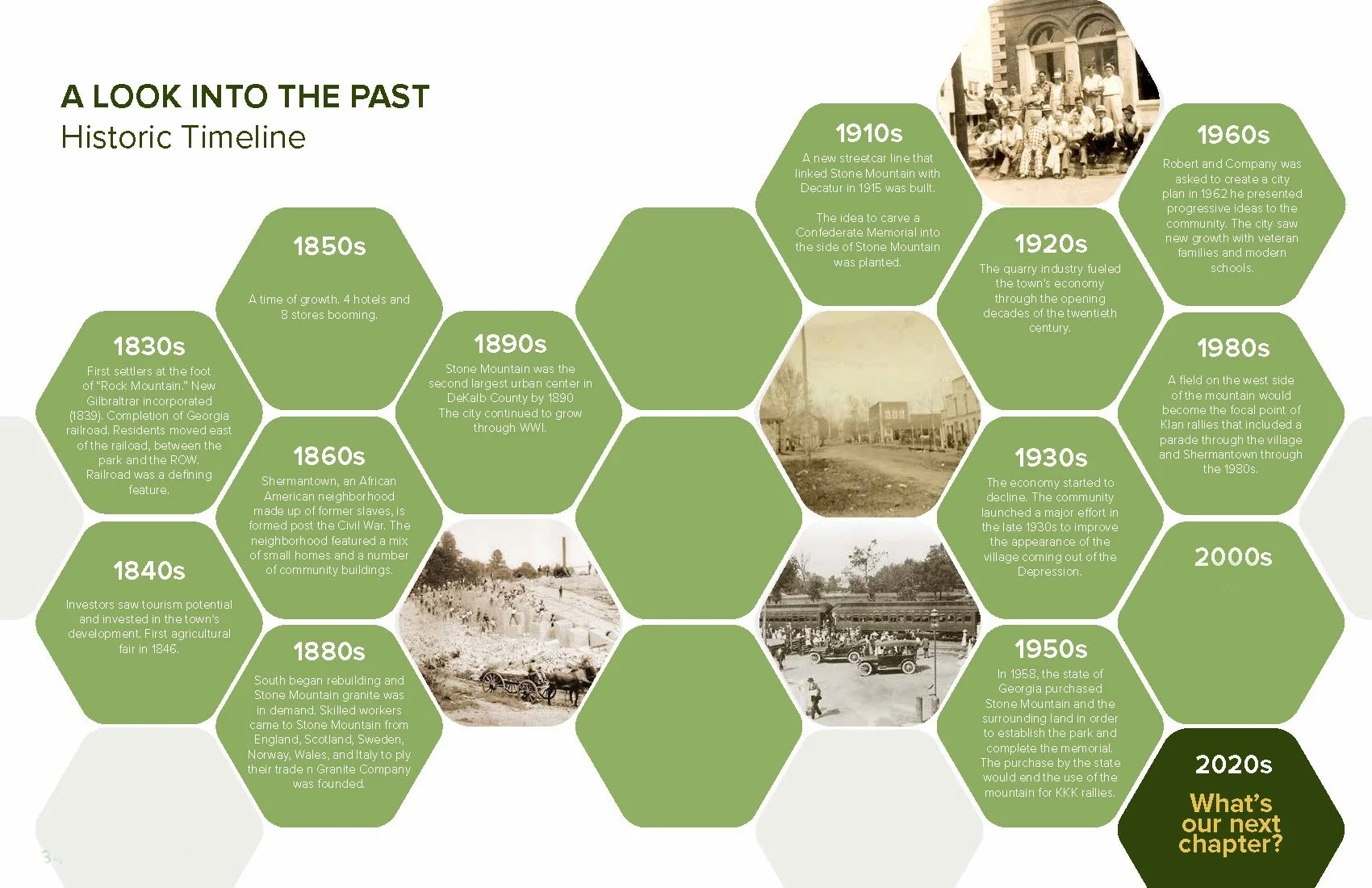
Placemaking and Public Art.
Beyond trail connectivity, the study explored how public art and placemaking could help Stone Mountain Village confront its complex history and shape a more inclusive future. The Confederate memorial carved into Stone Mountain, the area's history of Ku Klux Klan activity, and the legacy of racial division stand in contrast to the rich history of Shermantown, an African American community established by formerly enslaved people after the Civil War. These histories present an opportunity to acknowledge past injustices, elevate overlooked voices, and create a new narrative for the Village.
JFG Cities led the exploration of public art and placemaking opportunities, developing a historical narrative and identifying strategies to integrate storytelling throughout the proposed trail network. Through murals, asphalt art, creative wayfinding, and interactive installations, the study explored how everyday public spaces could become places of reflection, connection, and celebration. The approach positioned public art not simply as beautification, but as a tool to recognize the community's diverse heritage, foster belonging, and help write a new chapter for Stone Mountain. Learn more.
Activation Sites and Stitching Sites: Public Art Opportunities.
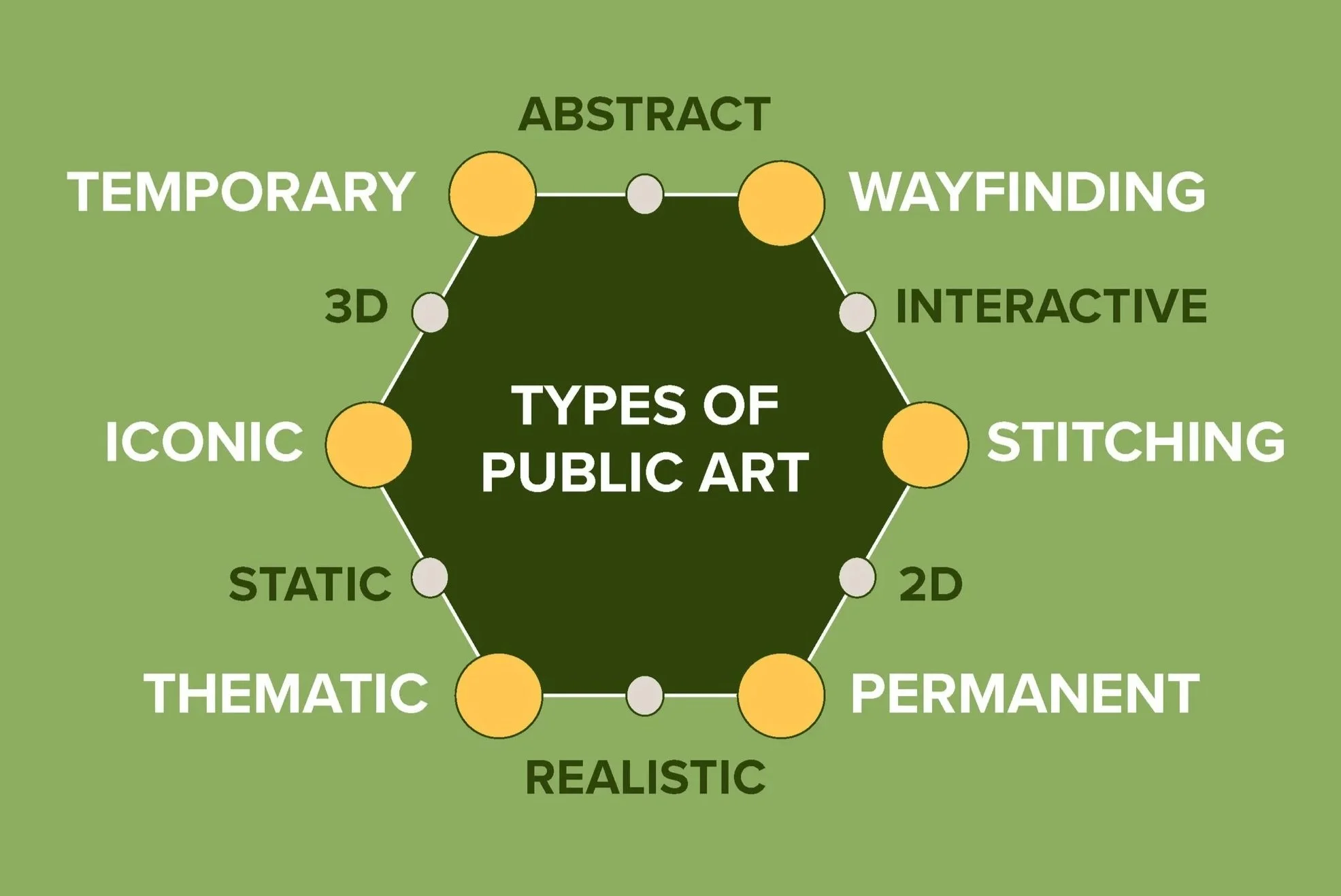
The proposed trail network creates opportunities to integrate public art throughout Stone Mountain Village, transforming everyday connections into places of discovery, gathering, and storytelling. The study identifies three key activation sites where larger placemaking interventions can enhance the public realm (orange hexagons), alongside stitching opportunities (red dots) that connect these destinations through murals, asphalt art, creative wayfinding, and smaller installations. Together, these interventions establish a cohesive visual identity, celebrate the Village’s diverse history, and turn the trail network into an experience that extends beyond mobility. A public art framework explored a range of interventions, from iconic installations at key activation sites to smaller thematic elements that stitch the Village together. Temporary and permanent art, creative wayfinding, and interactive experiences offer flexible opportunities to reinforce local identity and bring storytelling into everyday public spaces.
JFG Cities Role: Placemaking and Branding Strategist. Project completed in partnership with POND.
Client: City of Stone Mountain, ARC.
Year: 2025