
Collier Road Placemaking Strategy
Part of the Collier Road Multimodal Study
Overview.
As part of the Collier Road (Rd) Multimodal Study, the Upper Westside CID (CID) is exploring alternatives to make Collier Road more walkable and accessible to all users. Beyond the recommendations for future infrastructure improvements, the CID considers placemaking strategies to be critical to the success of the project. This strategy, which is part of the larger Multimodal Study, identifies potential locations and types of placemaking strategies along the corridor.
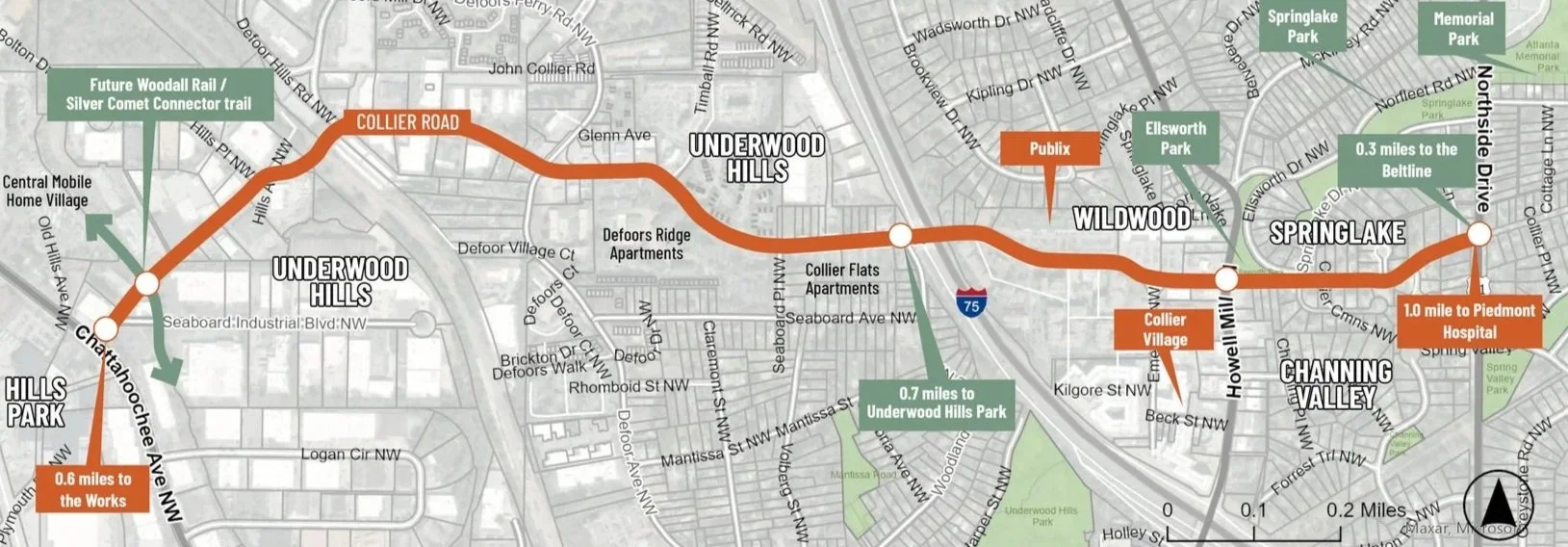
The Multimodal study area spans Collier Rd from Chattahoochee Ave to Northside Dr, about 1.7 miles long. This represents the entirety of Collier Rd that is within the CID boundaries. Collier Rd is a two-lane road with only some sections of sidewalks and intermittent bike lanes straddled across the gutter and asphalt. It has a mix of land uses, including single-family residential, medium-density residential, commercial and industrial. There are four signalized intersections with pedestrian crossings, albeit sometimes not in all directions, and no mid-block pedestrian crossings. The Multimodal Study created alternatives for a shared-use path that will accommodate pedestrians and cyclists along the corridor.
Local Context.
Collier Rd serves as a vital connector within Atlanta’s Upper Westside, threading through a rapidly evolving urban landscape and multiple historic neighborhoods. Historically industrial, the corridor is now a focal point for multimodal planning and community reinvestment, as highlighted by Collier Rd’s Multimodal Study. This segment of Collier Rd balances legacy neighborhoods with emerging mixed-use developments, offering opportunities to enhance walkability, transit access, and placemaking strategies that reflect the area’s industrial roots and future-forward ambitions.
Historic Significance.
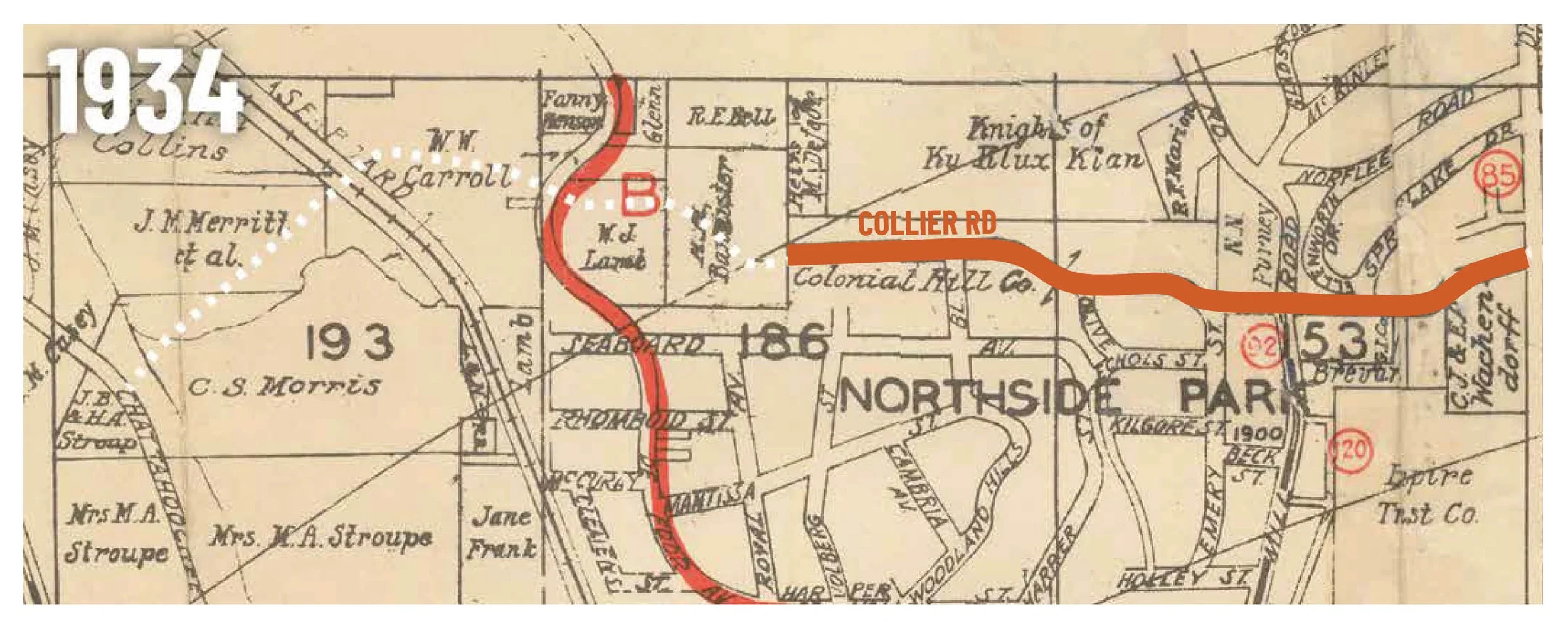
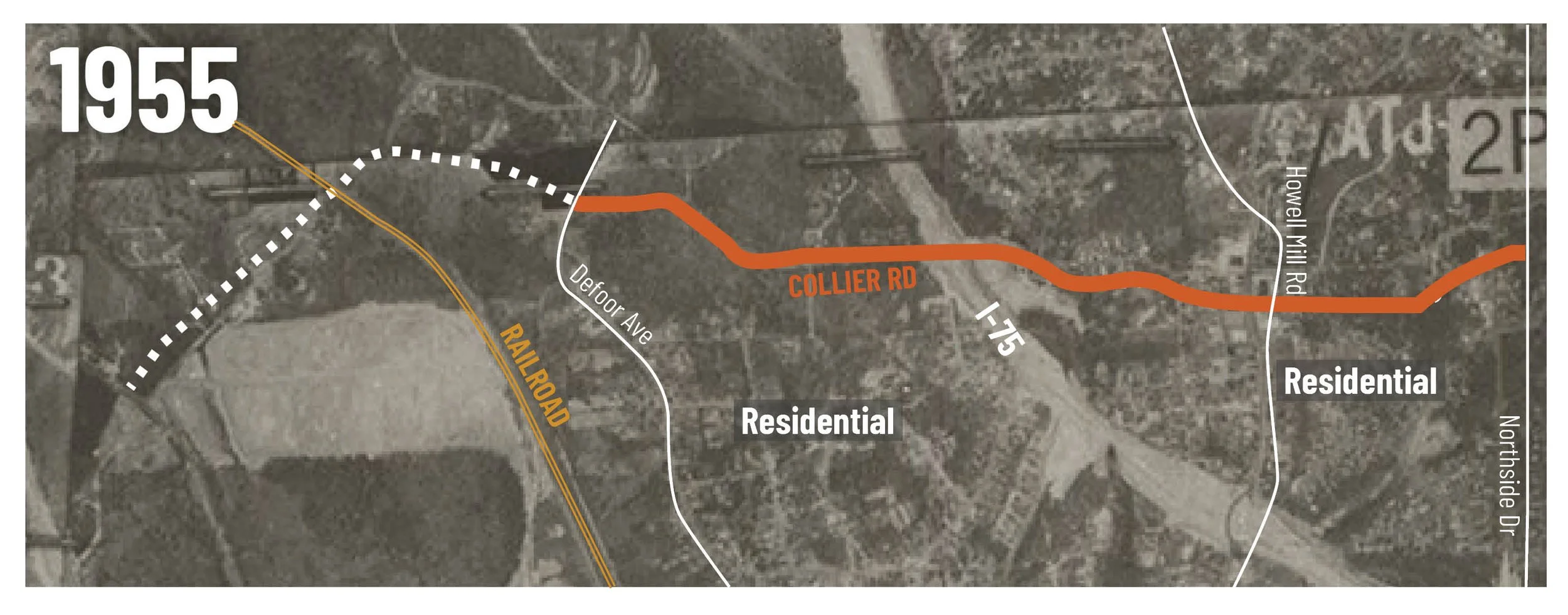
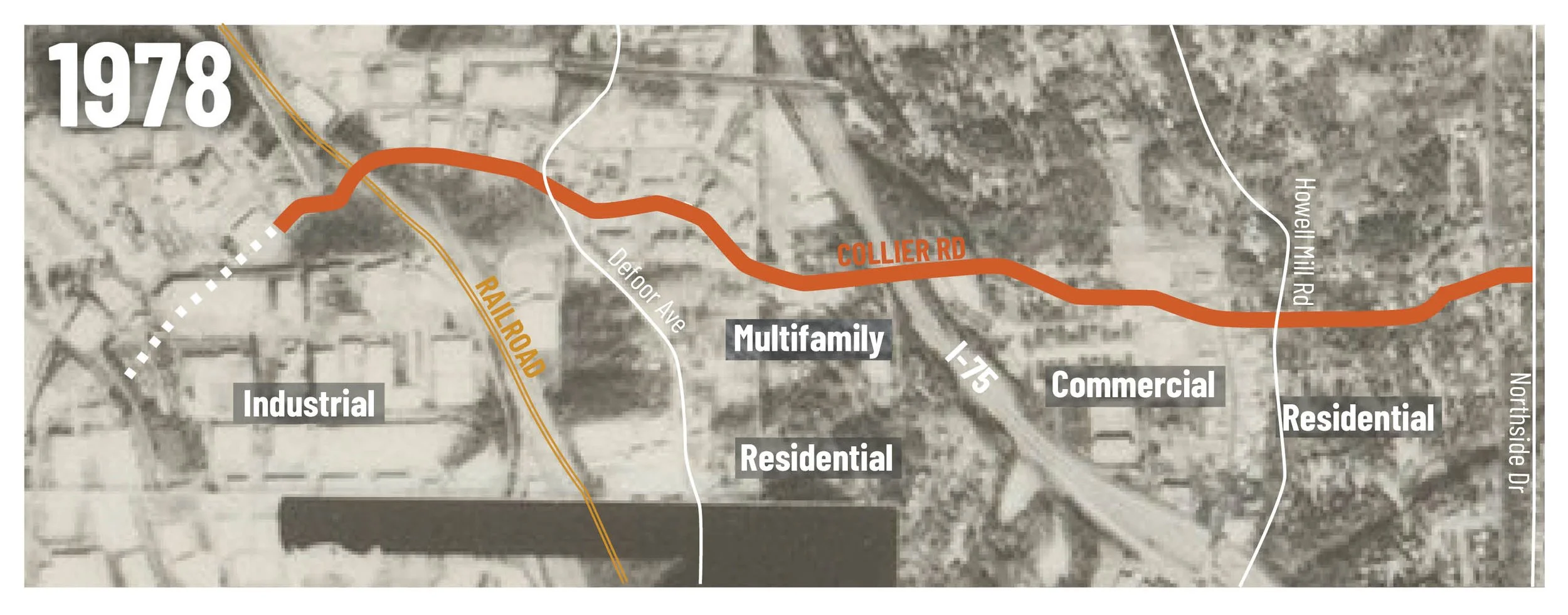
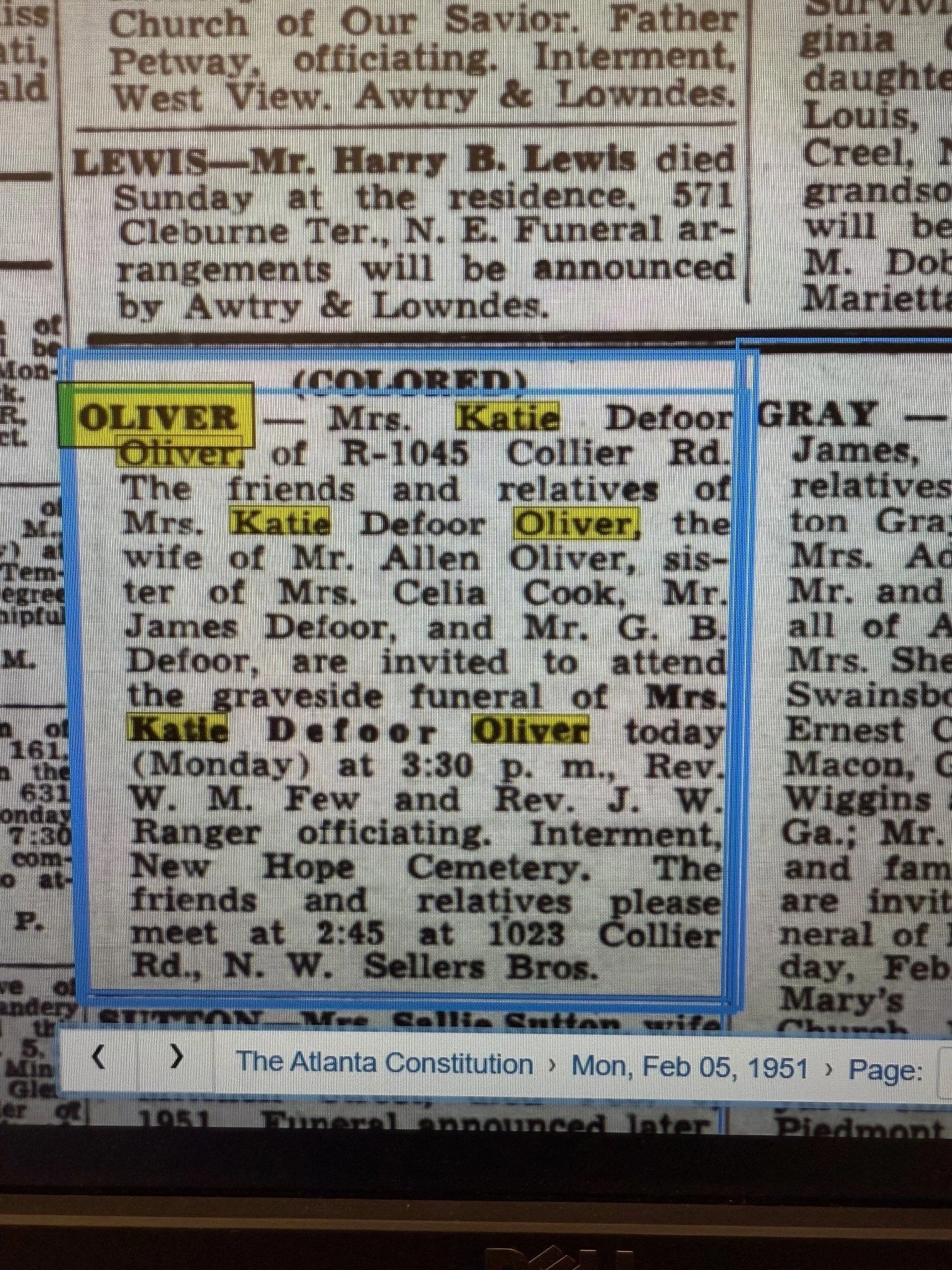
Collier Rd has played an important role in the history of Atlanta, particularly after the settlement of pioneer families such as the Colliers and the Howells. Both families owned significant amounts of land when they arrived, including many historic mills in the Westside. They helped shape the Westside’s urban fabric as we know it today.
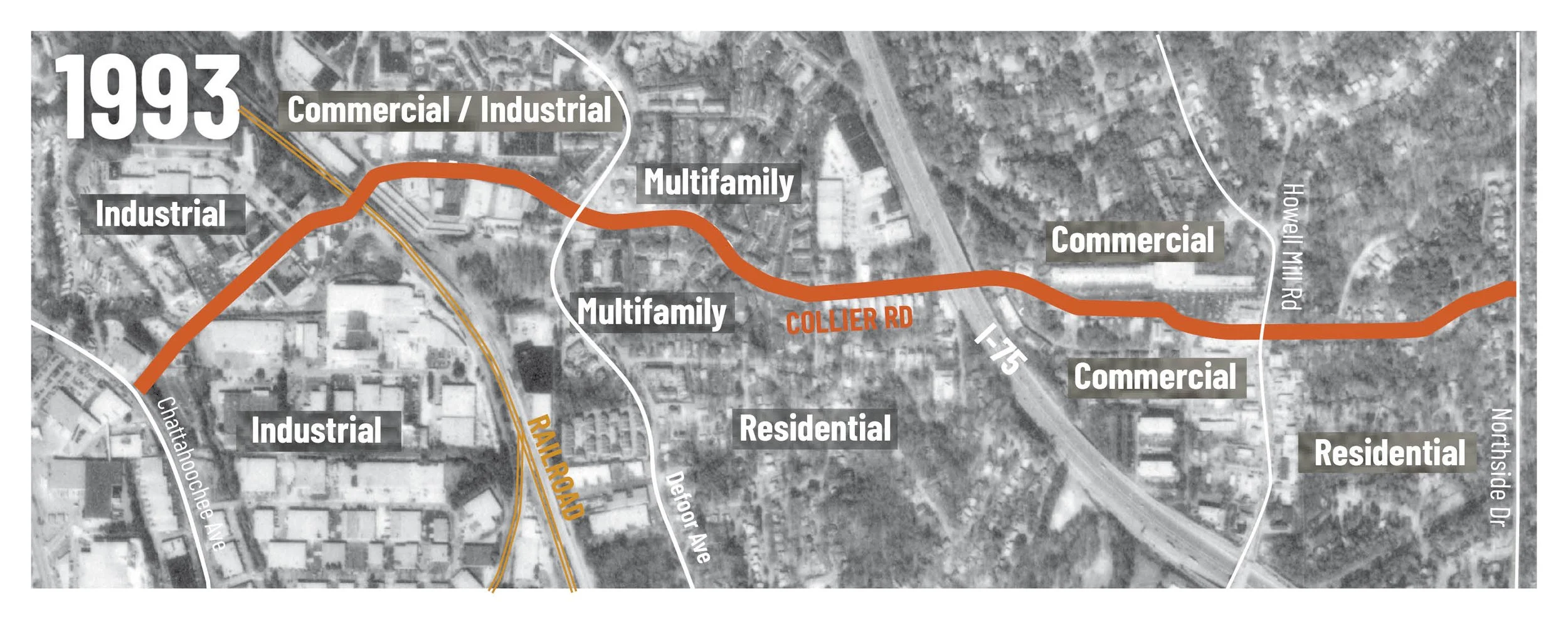
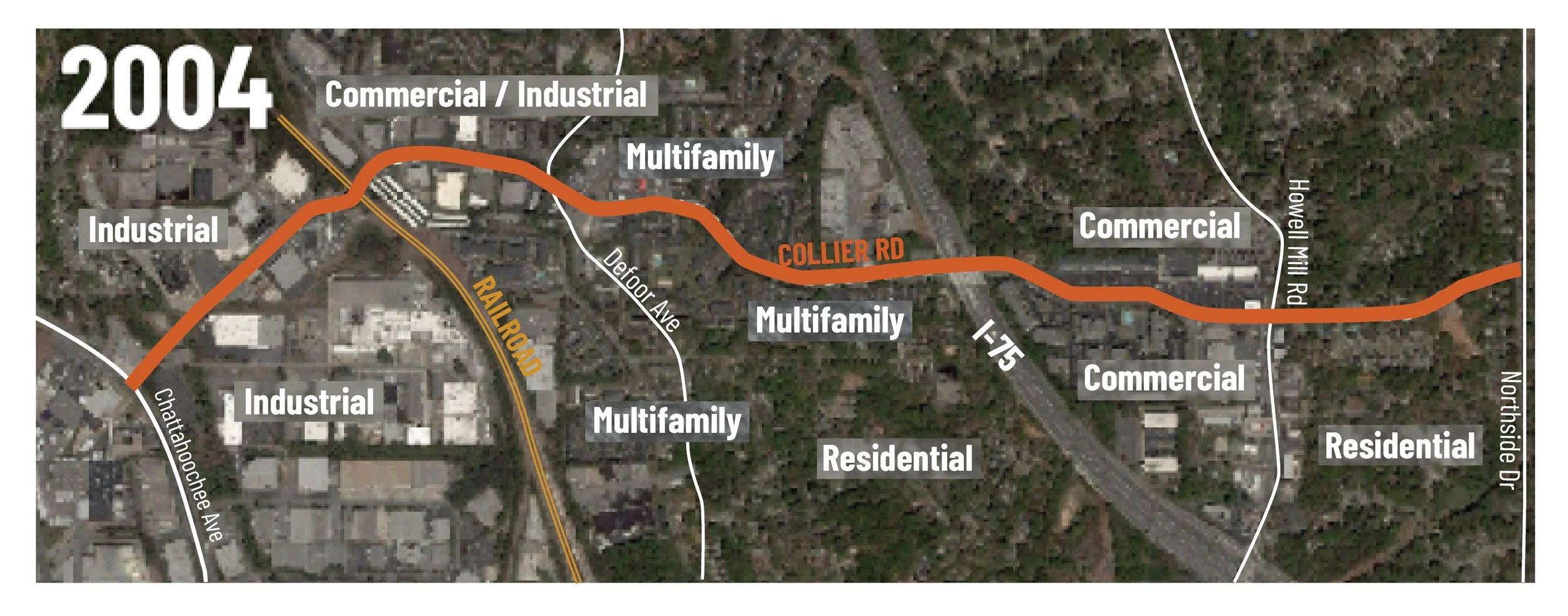
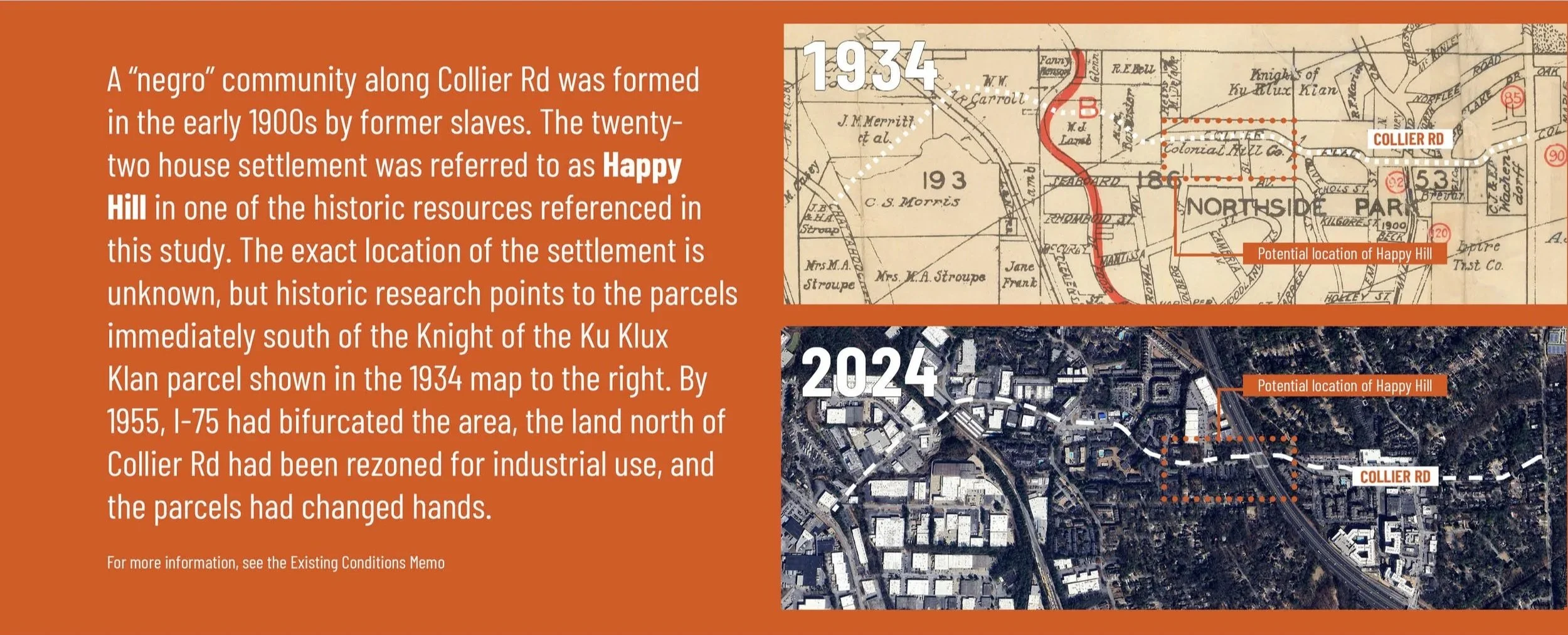
A portion of Collier Rd dates back to the 18th century. The historic maps below depict the many changes the corridor has experienced since as well as its expansion towards the west. From the construction of the railroad and the streetcar on Howell Mill Rd in the early days to the bisecting highway; from the development of residential neighborhoods early on to the later industrial properties west of Defoor Ave; Collier Rd continues to morph and adapt into a vibrant, mixed-use corridor in our city.
The Placemaking Strategy
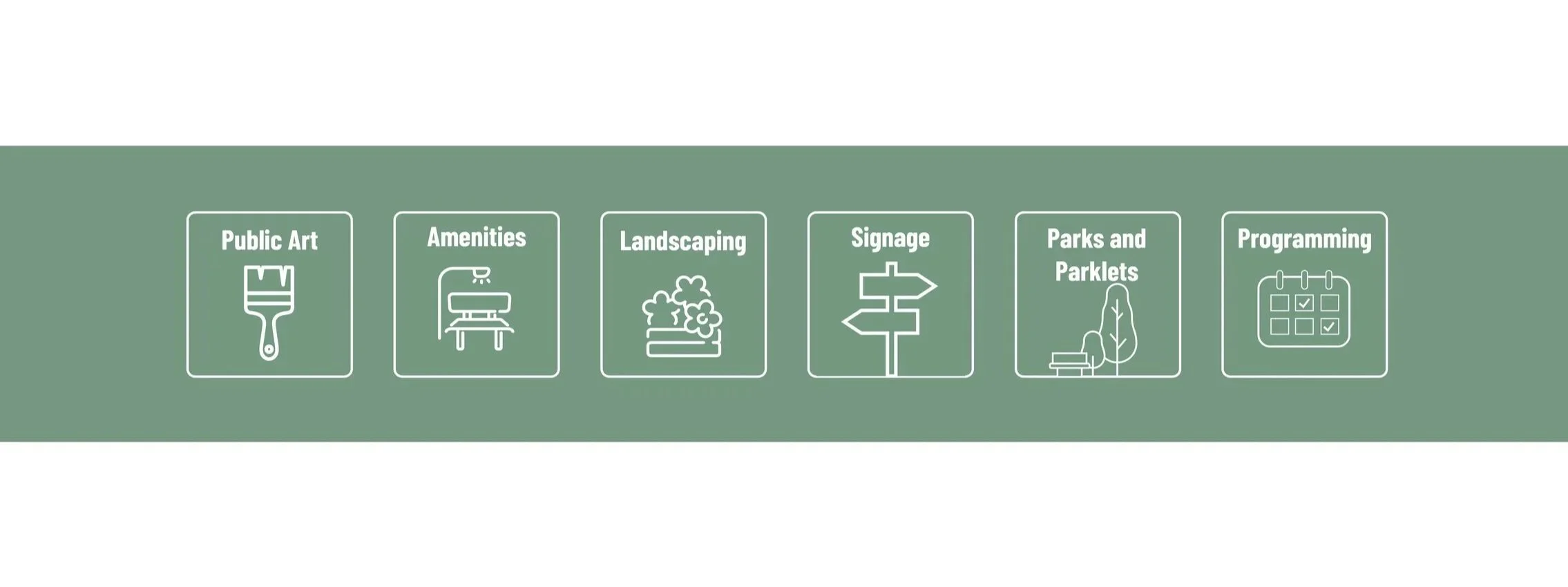
Multiple strategies were identified as part of the planning process and grouped into six categories: Public Art, Amenities, Landscaping, Signage, Parks and Parklets, and Programming. The strategies were applied throughout the corridor and at specific sites: activation sites.
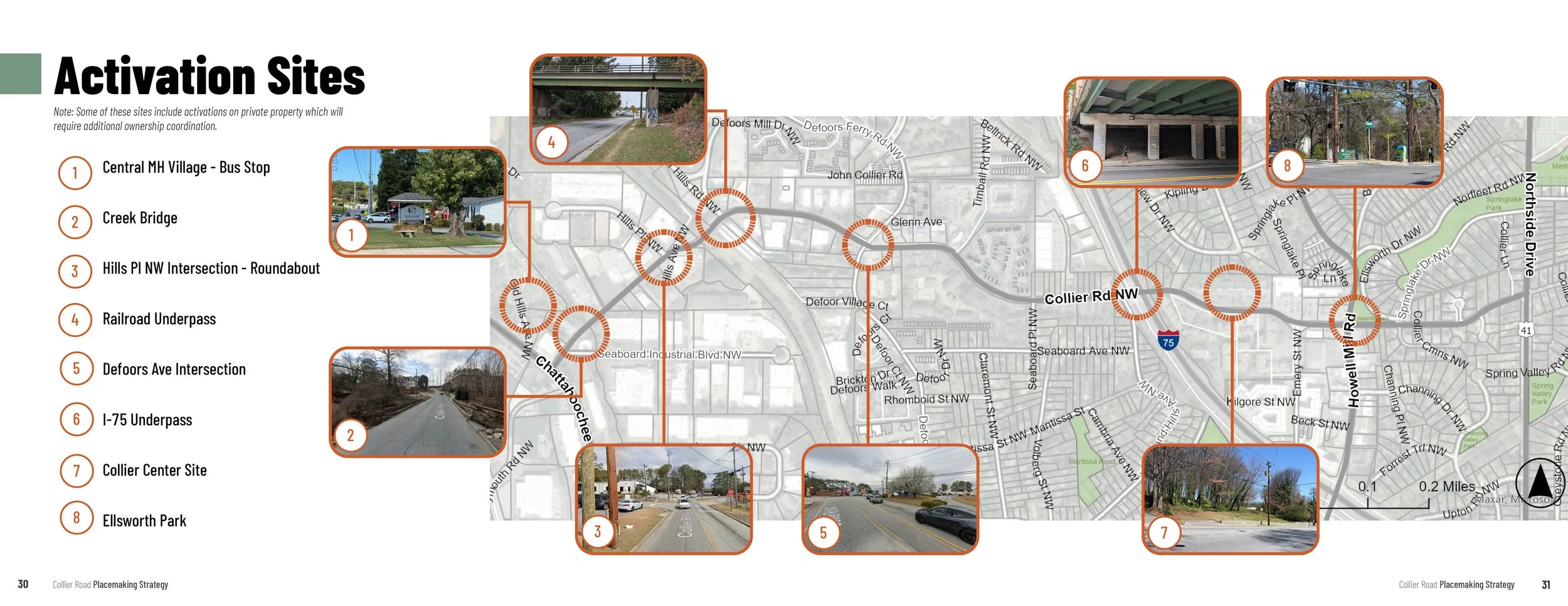
Branding on Collier Road.
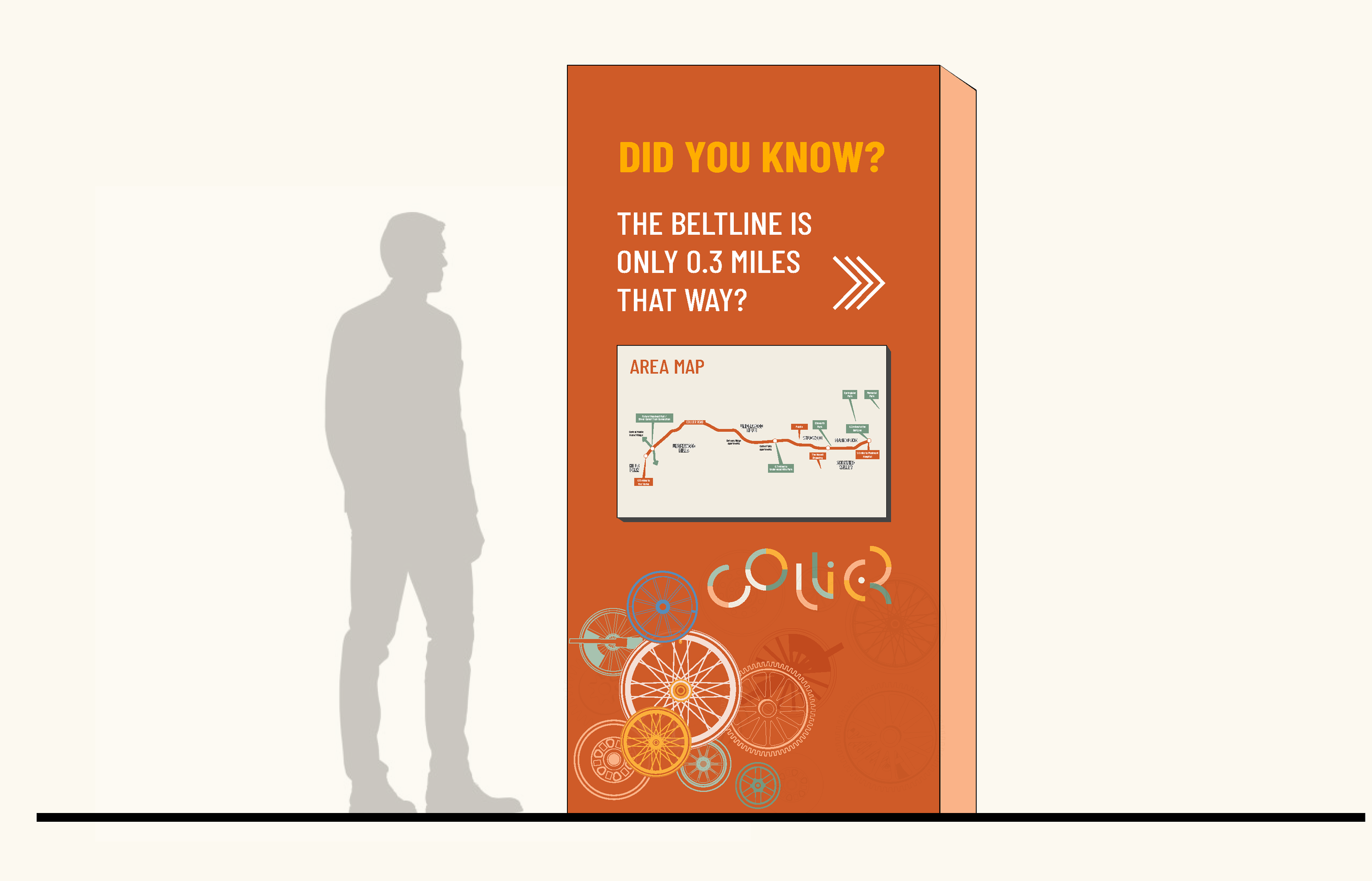
An essential aspect of placemaking is giving voice to a place’s identity while signaling that certain spaces are open and welcoming for public use; especially those that might otherwise be overlooked or dismissed. Collier Rd offers an opportunity to do both through the introduction of a branded bike rack. By developing a recognizable brand for Collier Rd, property owners and businesses could be encouraged to incorporate it into public-facing improvements—such as bike racks—reinforcing a shared sense of community. The following concept, which is applied beyond branded bike racks, is a launching point for other concepts and/or ideas to be explored.
From Mills to Wheels.
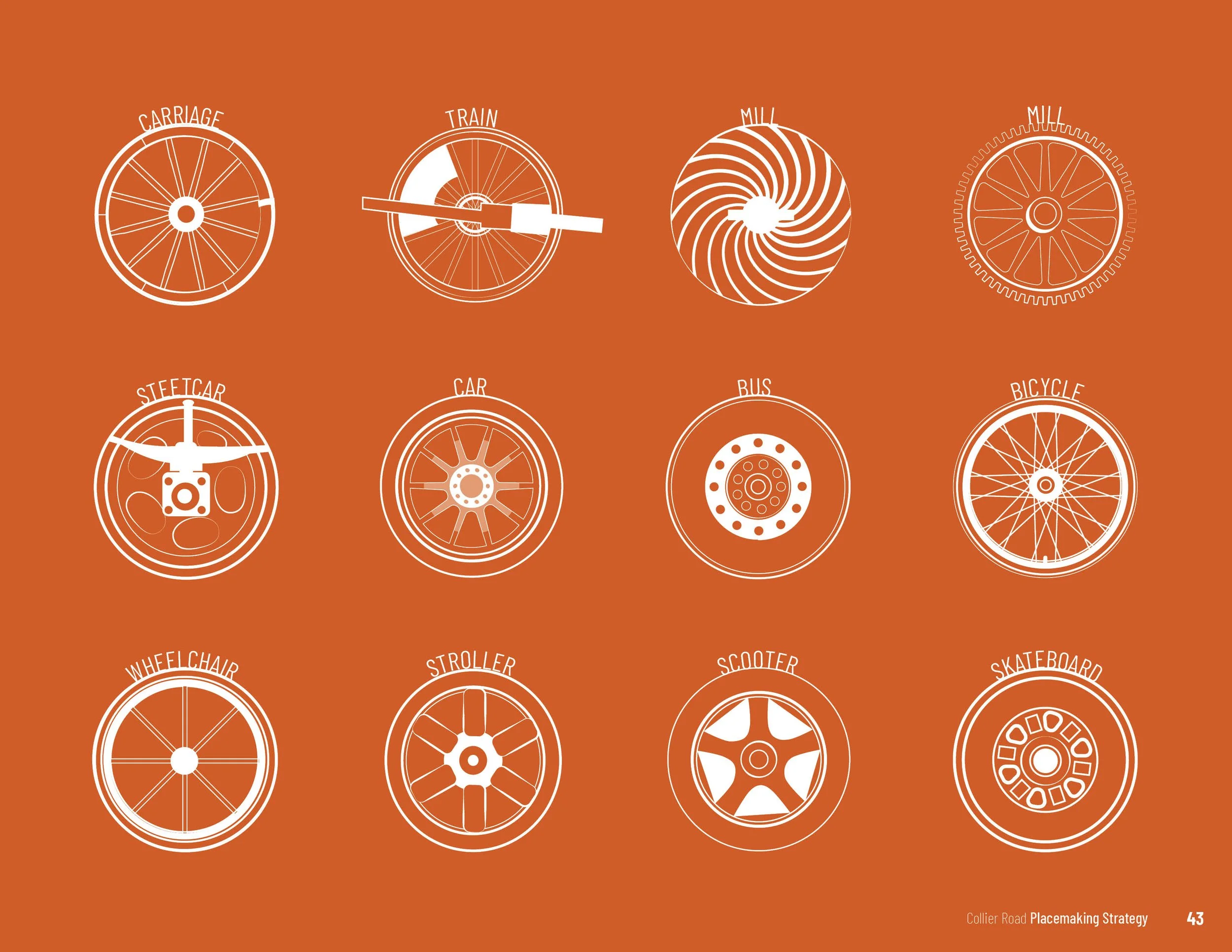
People have often referred to both the wheel and the city as two of humankind’s greatest inventions—and rightly so. Their unmatched ability to connect people and drive progress has shaped civilizations across time. This branding concept for Collier Rd draws on the strengths of both, celebrating the corridor’s industrial heritage while envisioning its multimodal future—told through the lens of a simple wheel.
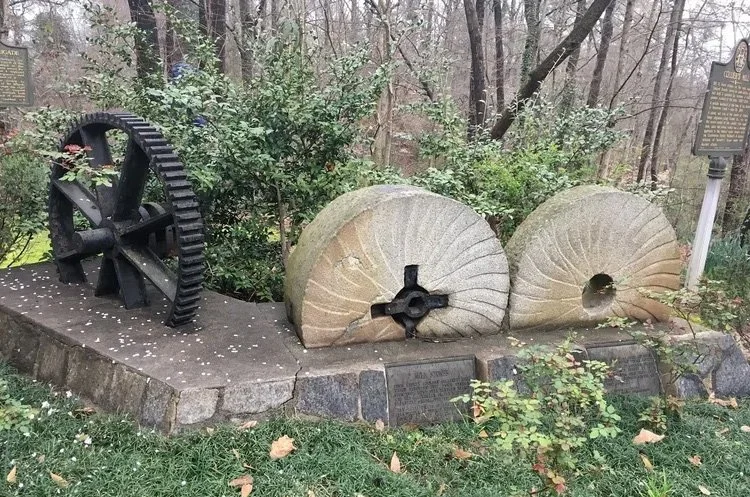
From the horse-drawn carriages that once traveled Collier Rd, to the industrial boom that brought railroads and grist mills owned by the Howell and Collier families, each era has left its imprint on the land and character of the street.
In more recent decades, Collier Rd has been shaped primarily by the automobile, echoing patterns seen across American cities. Yet other modes—streetcars, buses, and bicycles—have also played a role. Today, as Collier Rd transforms into a multimodal corridor, its infrastructure is being reimagined to support not just cyclists, but pedestrians of all ages and abilities. This includes smooth, safe sidewalks for children on bikes and scooters, parents with strollers, and people using wheelchairs.
At its core, the proposed brand is expressed through the visual language of wheels—abstracted into varied sizes, colors, and textures to reflect the diversity of users and modes. These wheels become symbols of movement and transformation, linking past and future through a vibrant, accessible streetscape. The name Collier is built using deconstructed quarter-wheels, a flexible motif that translates across applications: murals, branded bike racks, street furniture, and more. Aligned with the Upper Westside’s color palette, this brand complements the district identity while telling a distinct story.





Branded Bike Racks.
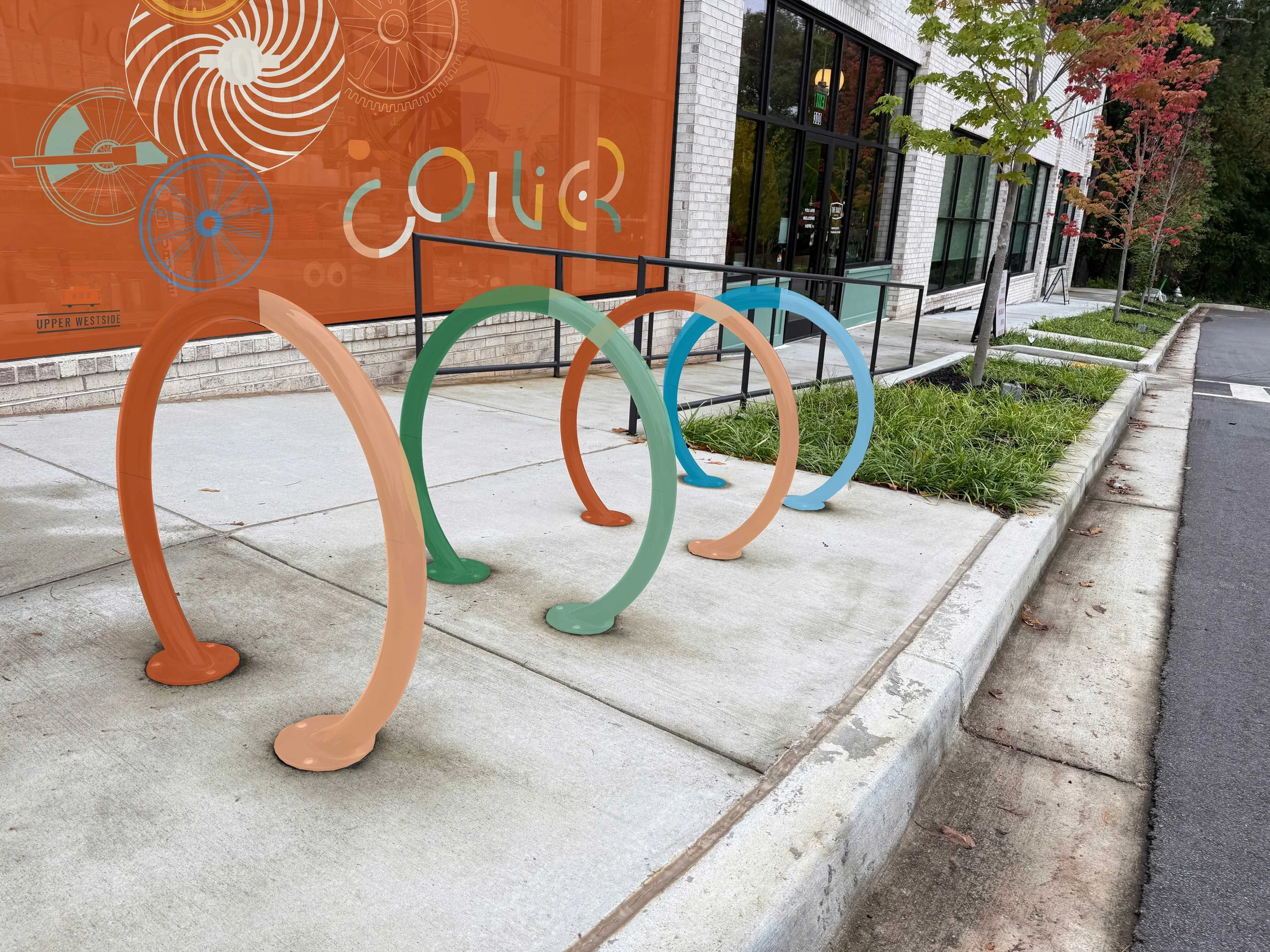
Through extensive community engagement, residents expressed a desire for private property owners to add prominent, highly visible bike parking to support end-to-end cycling facilities along Collier Rd. These racks would serve both current cyclists using existing bike lanes and future users of the planned multi-use path. The concept of a branded bike rack developed as a powerful tool, not only to enhance the visibility and value proposition of the multimodal improvements, but also as the trigger for developing a cohesive brand identity for the entire corridor.
The following examples demonstrate how the brand’s half- and quarter-circle motifs, described above, can be easily adapted into bike rack designs using simple paint applications or vinyl overlays.
JFG Cities Role: Placemaking and Branding Strategist. Project completed in partnership with POND.
Client: Upper Westside CID
Year Completed: 2026